Keycap Profiles Explained: Cherry, SA, OEM and Low Profile
Keycap profiles explained simply: how Cherry, OEM, SA and low profile caps differ in height and shape, plus PBT vs ABS plastic and what doubleshot legends mean.
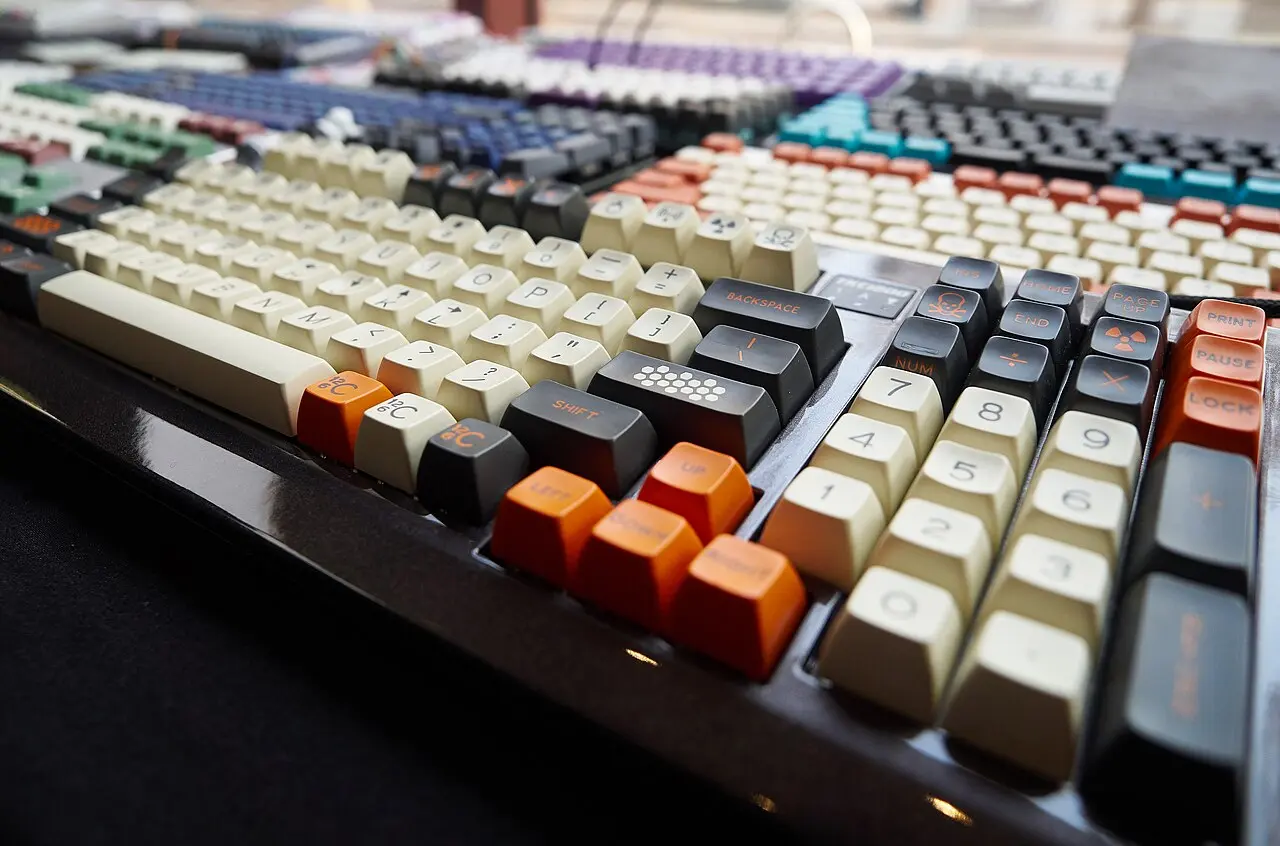
A keycap profile is the height, top shape and row angles of a keycap set. Cherry and OEM are medium-height and sculpted, SA is tall with a deep round dish, and low profile caps are thin and flat.
Put two mechanical keyboards side by side and the keys can look completely different: one tall and rounded like an old typewriter, another low and crisp, a third almost flat. That is keycap profile, and it changes how a board looks, feels and sounds.
What is a keycap profile?
It is the shape of a keycap set: how tall the caps are, the shape of the top, and how each row is angled. Sculpted profiles give each row its own height and angle, so the board curves to follow your fingers. Uniform profiles make every row the same, so any cap fits any position.
Tops are either cylindrical, curving in one direction, or spherical, dipping in the middle like a shallow bowl that cradles your fingertip.
What are the main keycap profiles?
| Profile | Height | Top shape | Rows | Feel |
|---|---|---|---|---|
| Cherry | Medium-low | Cylindrical | Sculpted | Crisp, comfortable for fast typing |
| OEM | Medium | Cylindrical | Sculpted | Familiar, slightly taller than Cherry |
| SA | Tall | Spherical, deep dish | Sculpted | Retro, rounded, more travel to the top |
| Low profile | Very low | Flat or shallow | Usually uniform | Slim, close to a laptop keyboard |
Cherry, named after the original Cherry keycaps, sits a little lower than OEM and feels precise. Many enthusiasts prefer it.
OEM is what you find on many pre-built mechanical keyboards. If you bought one off the shelf, it was probably OEM.
SA is tall and rounded, with a dish that cups each fingertip. It recalls old terminals, which is why it so often comes in beige and cream. The height takes getting used to.
Low profile caps are thin and nearly flat, made for low-profile switches with shorter travel.
Uniform profiles such as DSA (low, spherical dish), XDA (a little taller, wide shallow top) and MOA (rounded "mouse" caps with soft edges and a spherical dish, a favourite for illustrated sets) suit custom layouts, since any cap goes anywhere. The trade-off is a flatter board without the curve that guides your fingers between rows.
Is PBT or ABS better for keycaps?
Each has trade-offs. PBT is harder and denser, usually with a dry, textured surface that resists shine, and it often sounds a little deeper. ABS is smoother, takes vivid colours well and is the classic material for doubleshot caps, but heavily used keys can turn shiny.
Pick PBT for caps that stay looking new, and good doubleshot ABS for saturated colours and crisp legends. Plastic also changes the sound, as our guide on why mechanical keyboards sound good explains.
What does doubleshot mean?
Doubleshot caps are moulded in two shots of plastic, one for the legend and one for the cap, so the legend runs right through and cannot wear off. Dye sublimation, common on PBT, soaks dye into the plastic and is also durable, though it works best with dark legends on light caps. Laser etching or printing is cheaper and can fade.
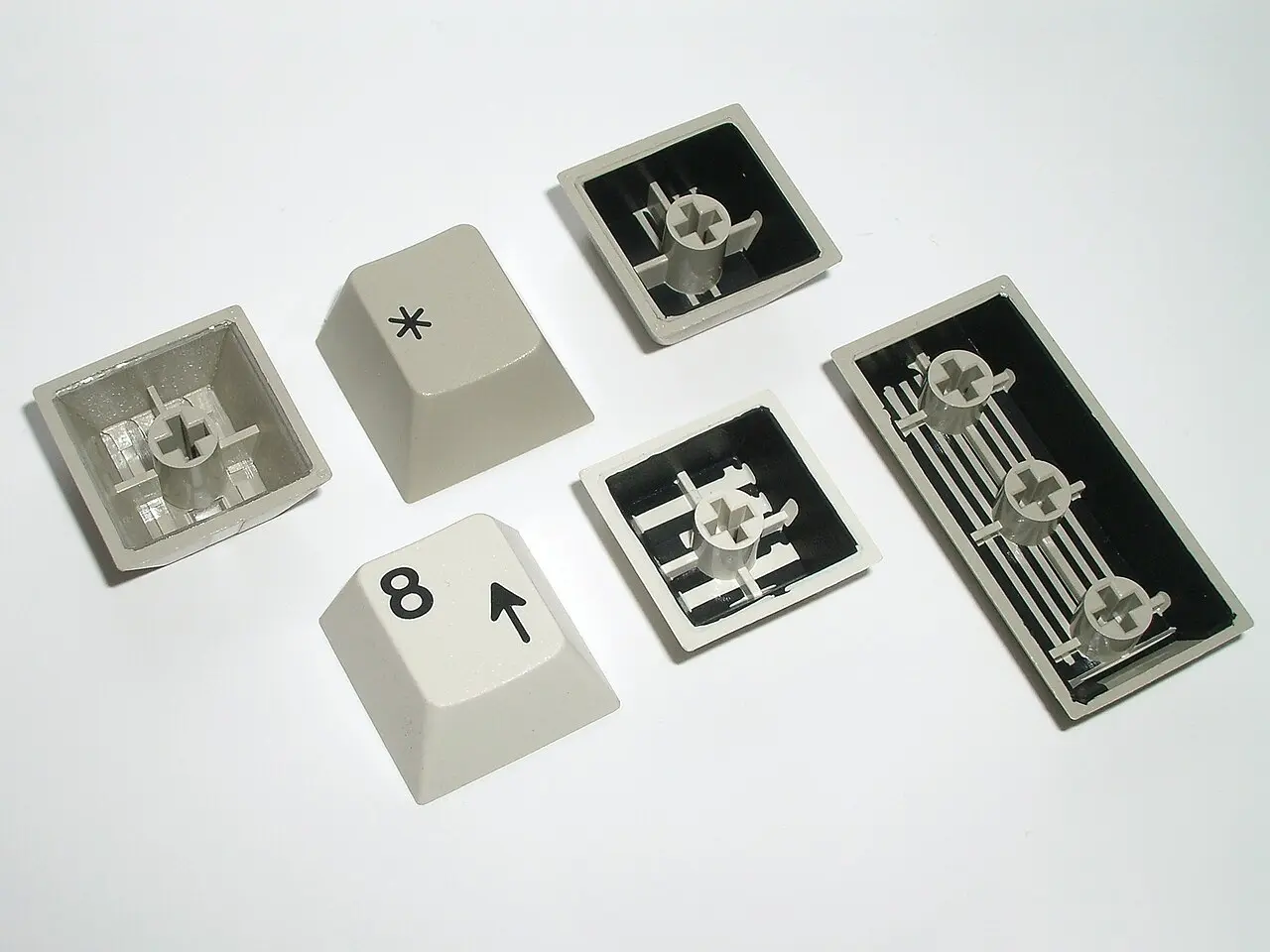
Tip: Translucent "jelly" caps let the switch and any lighting show through, changing a board's look without changing its layout.
How do keycap profiles show up in Calcurate?
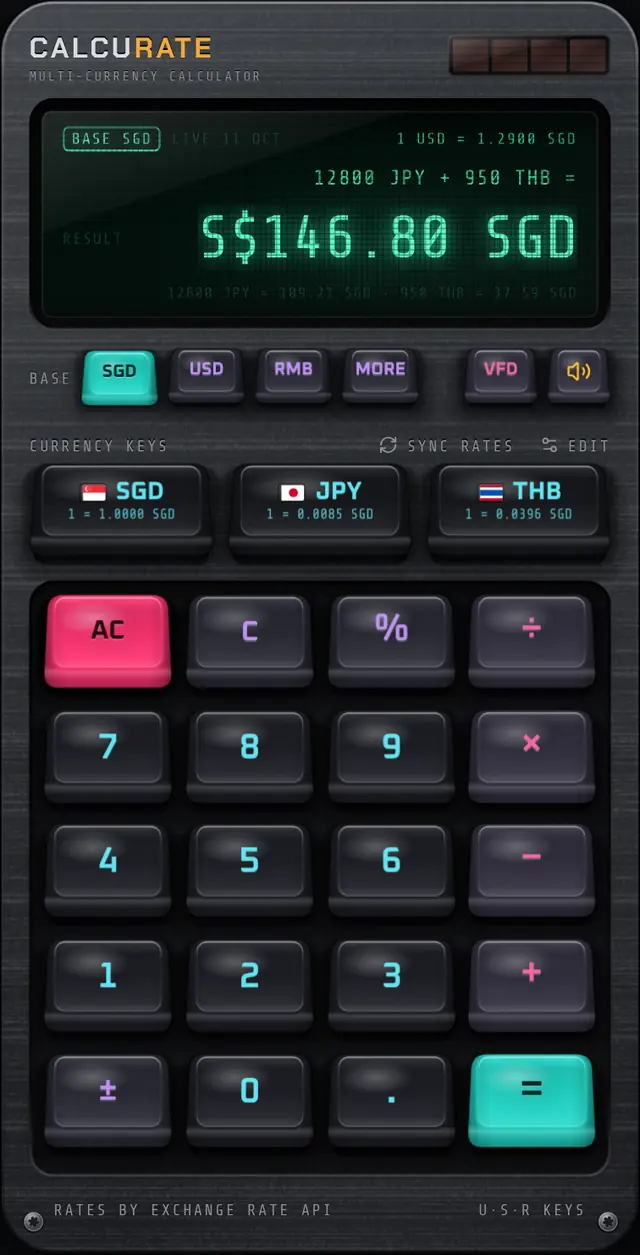
Calcurate draws its calculator in 3D, with keycaps modelled on real profiles and sitting on Cherry MX-style switches. Each of its 11 sets borrows a real profile and material. Calcurate and Terminal are free; the rest come with Calcurate Pro.
| Set | Profile | Material | Look |
|---|---|---|---|
| Calcurate (default) | Cherry | PBT | Warm off-white numbers, slate operators, red AC, amber = |
| Terminal | SA | PBT | Retro beige |
| Midnight Neon | Cherry | Doubleshot ABS | Dark caps with cyan, violet and pink legends |
| Sakura | SA | PBT | Soft pink and cream with a sage = |
| Ice Jelly | Cherry | Translucent | Icy blue caps with the switch showing through |
| Carbon | Low profile | Doubleshot ABS | Grey and black with orange accents |
| Kitty Café | MOA | Dye-sub PBT | Cream and powder blue, hand-lettered, with cats and paw prints |
| Deep Sea | MOA | Dye-sub PBT | Blues with waves running across the keys and sea life |
| Solar Terms | Cherry | Dye-sub PBT | Orange numerals, Chinese brush lettering, painted landscapes |
| Matcha Fade | Cherry | PBT | Cream fading to matcha green down the keypad |
| Graphite | Cherry | PBT | Charcoal to light grey, legends printed on the front |
Hold any key for three seconds to pop it off and pick a new set. See Keycap Studio and the mechanical keypad.
How do you choose a keycap profile?
Comfort first, then looks. Try Cherry if you type fast, OEM if you want the familiar default, SA if you love a retro look and do not mind height (a wrist rest helps), and low profile for a slim board.
Check compatibility before you buy. Most sets fit the common cross-shaped switch stem, but low profile switches often need their own caps, and some keyboards use non-standard bottom-row sizes.
The other half of the retro calculator look is the display: see our history of the vacuum fluorescent display.
FAQ
FAQ
What is the difference between Cherry and OEM keycaps?
Both are sculpted with a cylindrical top, but Cherry is a little shorter. Many people find it slightly more comfortable for fast typing.
Is PBT better than ABS?
Neither is strictly better. PBT resists shine and feels dry and textured; ABS is smoother, takes bright colours well and can develop a shine over time.
What does doubleshot mean on keycaps?
The cap and legend are moulded from two separate plastics. Because the legend runs all the way through, it cannot rub off.