🇨🇳 RMB → 🇸🇬 SGD
Convert Chinese Yuan (Renminbi) to Singapore Dollar
Today's RMB to SGD rate and a quick converter.
RMB to SGD
| RMB | SGD |
|---|---|
| ¥1.00 RMB | S$0.19 |
| ¥10.00 RMB | S$1.91 |
| ¥50.00 RMB | S$9.55 |
| ¥100.00 RMB | S$19.10 |
| ¥500.00 RMB | S$95.48 |
| ¥1,000.00 RMB | S$190.95 |
SGD to RMB
| SGD | RMB |
|---|---|
| S$1.00 SGD | ¥5.24 |
| S$10.00 SGD | ¥52.37 |
| S$50.00 SGD | ¥261.85 |
| S$100.00 SGD | ¥523.69 |
| S$500.00 SGD | ¥2,618.45 |
| S$1,000.00 SGD | ¥5,236.90 |
Mid-market rates. Your bank or card may charge a little more.
Add RMB and SGD in one sum
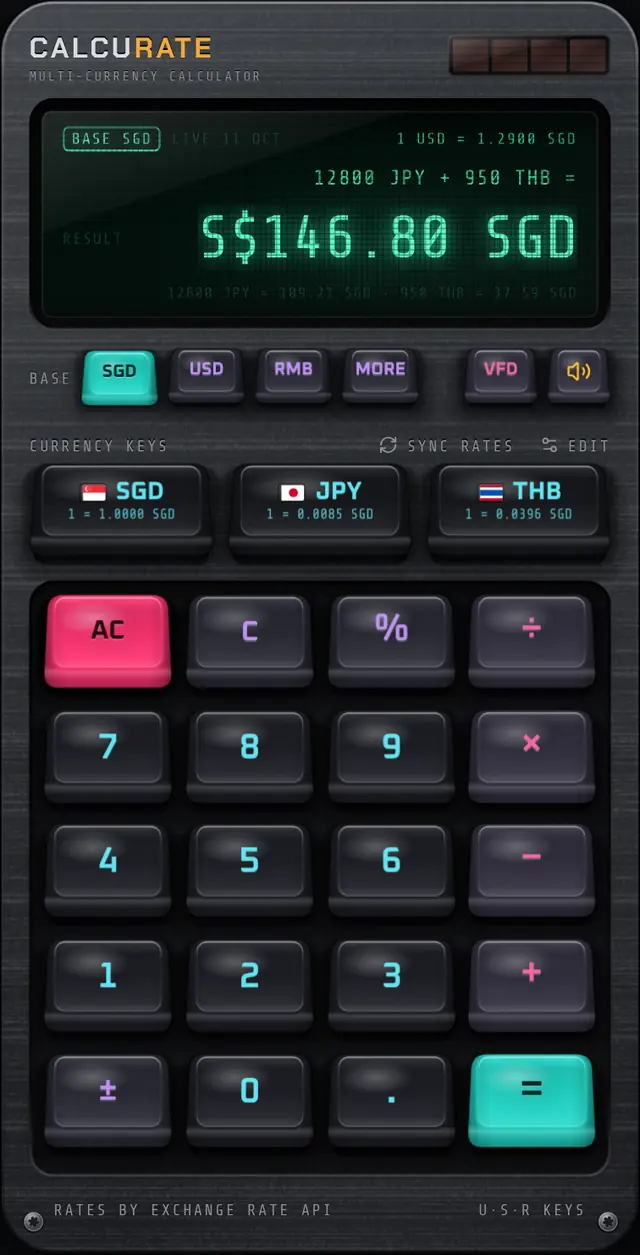
Got prices in both? Calcurate adds them up in one go.
Example rate.
About the Chinese Yuan (Renminbi) (CNY)
Symbol ¥. Used in mainland China.
- Renminbi (RMB) is the name of the currency; the yuan is its unit; CNY is the ISO code used by banks and rate feeds.
- Mobile wallets dominate everyday payments in mainland China, so prices are often paid by QR code rather than cash.
- Offshore yuan traded outside mainland China uses the unofficial code CNH and can trade at a slightly different rate.
About the Singapore Dollar (SGD)
Symbol S$. Used in Singapore (Brunei dollars are also accepted at par in Singapore under a long-standing agreement).
- Restaurant menus often show "++" prices, meaning service charge and GST are added on top of the listed price.
- Cards and QR payments are accepted almost everywhere, though hawker stalls may prefer cash or local QR codes.
Getting a fair rate
Compare what you're offered with the rate above. The gap is what the exchange really costs you. And if a card machine abroad offers to charge you in your home currency, say no: paying in the local currency is usually cheaper. Here's why.
Going the other way? See SGD to RMB. Browse all supported currencies.
FAQ
Questions
How many Singapore dollars is 50 yuan?
About S$9.55 at the October 2026 rate of 1 RMB = 0.1910 SGD. Check the converter above for today’s figure.
What’s a quick way to convert RMB to SGD in my head?
Divide by about 5.
Is this the rate my bank will give me?
Usually not. This is the mid-market rate. Banks and cards often add a margin, so use it to see how much you’re really paying.
Download
Your next trip deserves a better calculator.
Add up prices in any currency, see every conversion, and enjoy every key press.